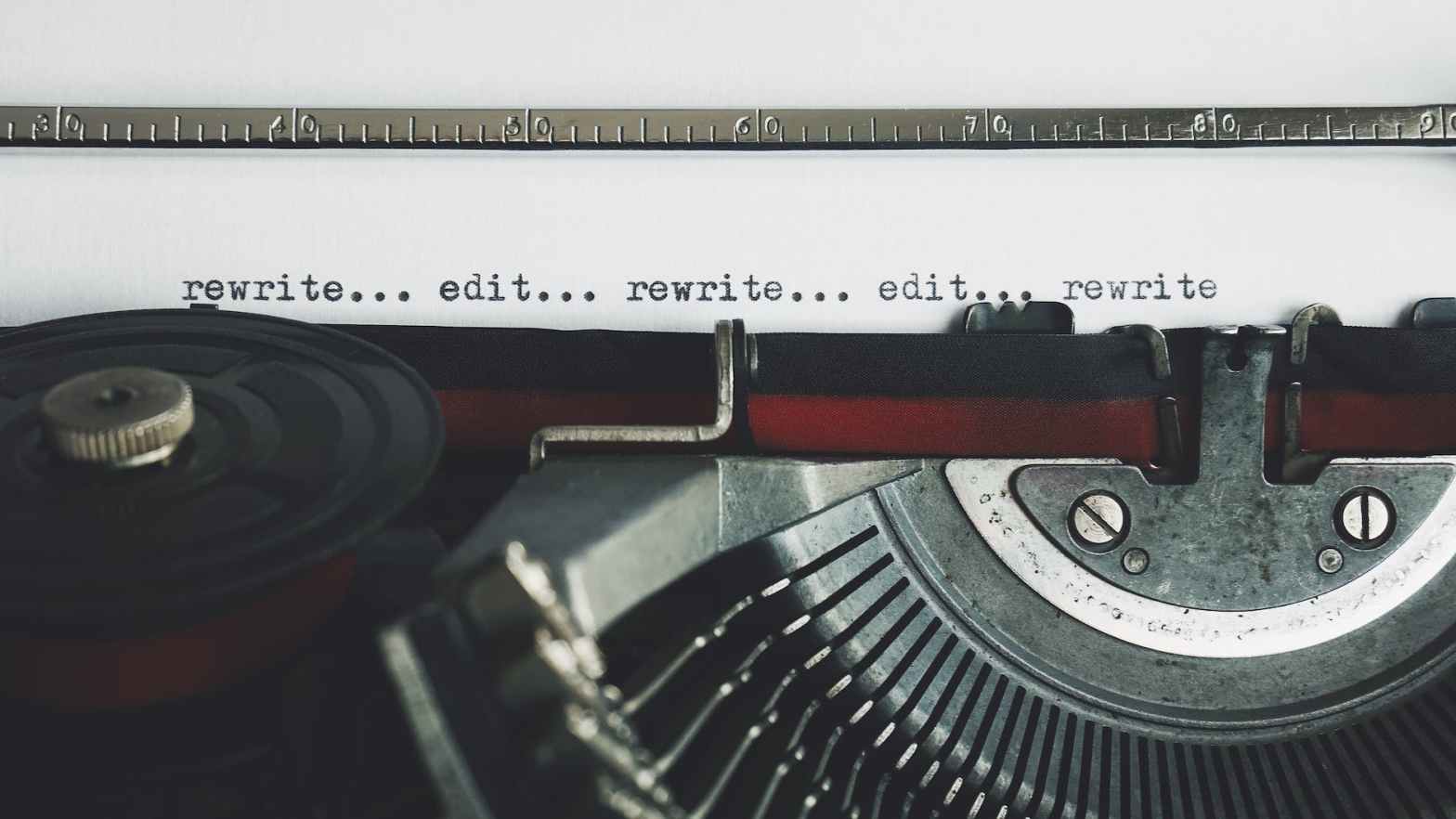
When I say I do copywriting and editing, people tend to latch onto the “writing” part.
“Ooh, what kind of things do you write?”
(See also: “Is that a legal thing?” No – for future reference, copywriting is nothing to do with copyright.)
Copyediting, on the other hand, can be a bit of a conversation killer – there’s a lot of mystery and misconception around it. So I thought it was time to bust some copyediting myths and explain what I actually do.
Myth 1: “It’s easier to edit other people’s stuff than write your own”
I totally get this. It’s frustrating when you’ve faced down a blank page and sweated over the words to fill it, only to have someone sweep in with their track changes and rip it apart.
But the idea that “those who can’t write, edit” couldn’t be further from the truth.
Copyediting isn’t an easy option – you really need to know good writing if you’re going to comment on someone else’s. Rather than changing your words for the sake of it (“I wouldn’t have said it like that”), I make sure all my edits contribute to clearer, sharper, more engaging copy.
Myth 2: “You don’t know enough about the topic”
No question about it – you know your subject better than I do. But you want to share that knowledge effectively with your reader, right?
As your friendly wordsmith, I’m here to help you do just that. I may not be an industry expert, but I see that as a positive. I can bring that fresh perspective and ask those “silly” questions about things you might have taken for granted.
After all, if I find something confusing, the chances are other readers will too – so let’s work together to make it clearer.
Myth 3: “It’s dumbing it down”
Ah, this old chestnut.
“But our readers are experts/professionals, we shouldn’t talk down to them.”
I completely agree – your readers deserve respect. But swapping waffle and jargon for plain English doesn’t mean patronising them.
While it’s true that knowledge levels vary depending on the audience (for example, you might explain “equities” to the general public, but not to financial advisers), it’s always best not to make assumptions. Your reader might be new to the field, find reading challenging, or have limited command of English, for instance. Being clear on your terminology benefits everyone.
Plus, no matter how smart your readers, why make them work harder than they need to? We’re all busy, and we all like information that’s clear, concise and to the point.
(The gov.uk website is a good example of how accessible language can be used to convey often complex information. Did you feel “talked down to” when you applied for a passport? More likely you thought, “Phew, that was surprisingly painless!”.)
Myth 4: “People don’t really care about these details”
Which words need capital letters? Is that an en-dash or an em-dash? Do we use the 24-hour clock, or am/pm? Should it be realise or realize?
You might think these are minor details that no-one will notice or care about (other than your pesky copyeditor). And guess what? If they’re consistent, no-one will notice them. But mix them up, and it jars: not only does your writing look sloppy, but it could be confusing.
It’s worth saying here that copyediting is not the same as proofreading. Once the edits are finalised, I’d always recommend a proofread of the “clean” version to check no errors have snuck in and your presentation is pristine.
So… what is copyediting?
For me, copyediting is about two things:
- Making your reader’s life easier – through clear, concise and easy-to-read content
- Helping you shine – through engaging copy that reflects you at your best
Correct grammar and punctuation are, of course, essential. But I spend more time thinking about the less scientific concept of “flow”.
Go with the flow
Writing that flows just sounds good. It starts with a clear, logical structure and sentences that are easy to follow. Long, rambling sentences can confuse your reader, but too many short ones can be grating.
“Flow” is also about word choice. When you’re close to a text, it’s easy to miss that you’ve used “significant” in two consecutive sentences, for example: could one of those be “large”, “considerable” or “important” to avoid clunky repetition?
I’ll also make sure the words you use fit with your tone of voice. How do you want readers to see your brand? Whether it’s serious, cheeky or reassuring, consistency is everything.
The three Cs: clear, concise, consistent
Confusion and ambiguity get in the way of your message, so I’ll make sure you’re using the right words (did you mean “compliment” or “complement”?) and clarify technical terms where necessary. And let’s keep things simple: why say “utilise” when you mean “use”?
Making sentences more active generally makes them clearer: rather than “deliver an improvement in”, how about simply “improve”? It’s shorter, too. While copyediting is about more than just cutting, it often makes your writing more concise by weeding out wasted words.
Finally, I’ll polish up those fiddly bits we talked about earlier. Getting your style and formatting consistent makes for a much smoother experience for your reader.
Now you know what copyediting is (and isn’t), do you think your writing could benefit from a fresh pair of eyes? Get in touch to talk sparkly copy and happy readers.
 Kate Mounce