Happy ever after: raising the next generation of readers

Another week, another article reporting that parents aren’t reading enough to their kids, particularly boys. It’s a familiar story – I feel like I’ve been reading versions of it since before my own children were born. The twist this time is the spotlight on Gen Z, the new generation of parents who are allegedly prioritising screens over books.

Of course, this is a generalisation – there will be plenty of young parents who love reading to their kids, and 40-somethings who find it a chore. But it’s sad to think that fewer families, whatever their age, are enjoying this precious time together.

The educational, social and emotional benefits of reading to children have been widely documented, and you can read any number of articles on the subject by people far more qualified than me. This blog isn’t one of those: it’s just me, as a parent, reflecting on my own experience of reading to my kids and the pleasure it’s brought us over the years.

Never too early to start

Maybe it’s because I’m Gen X (just), but it never crossed my mind NOT to read to my children. More likely, it’s because of my own upbringing. I had a particularly analogue 80s childhood – living abroad meant even kids’ TV was limited, and we would wait in eager anticipation for a kindly UK relative to post over a VHS tape stuffed with Rainbow and Raggy Dolls. On the other hand, my grammar-school Boomer parents (who still can’t pass a second-hand book stall empty handed) made sure I was never short of something to read.

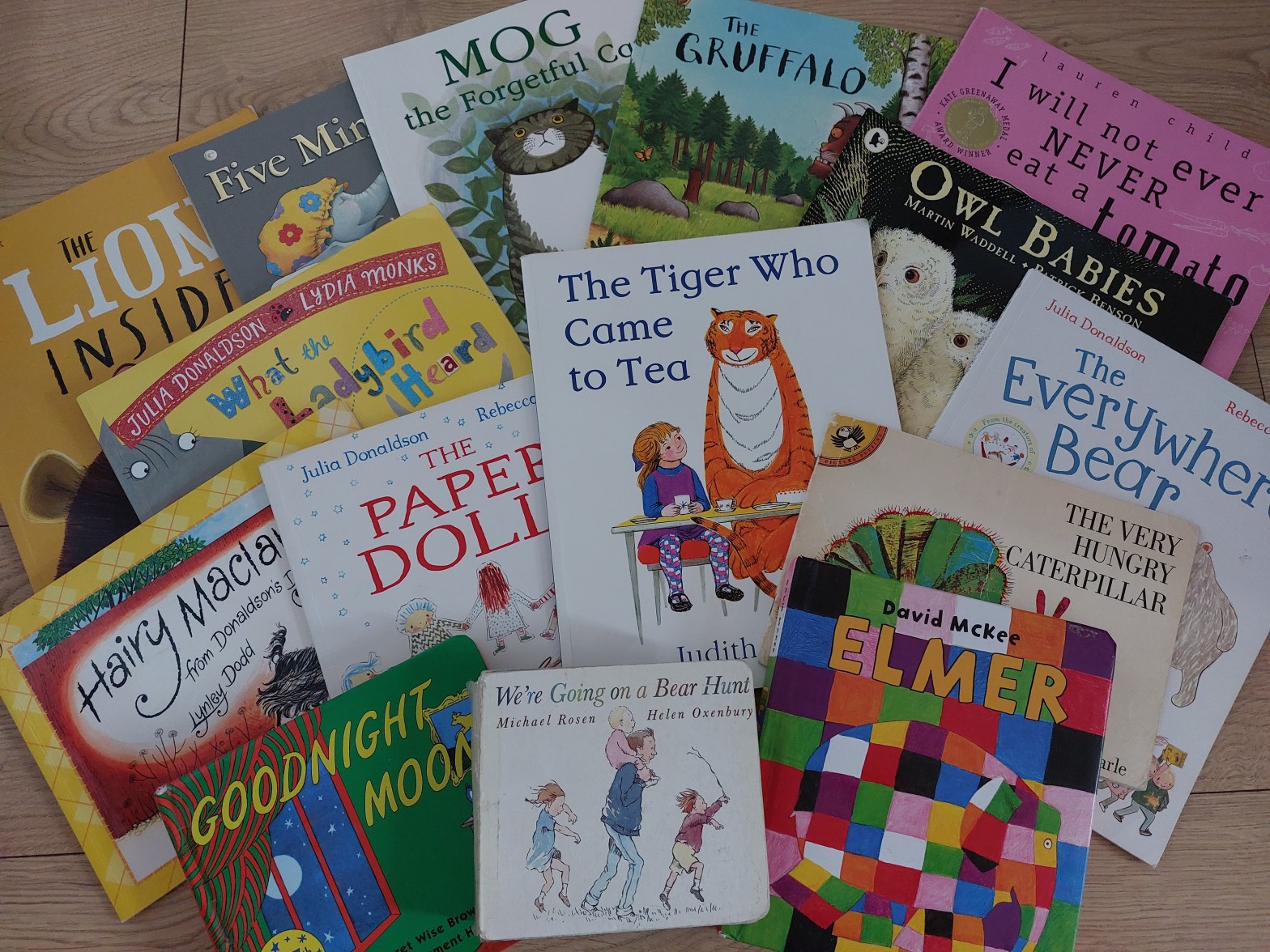
As I approached parenthood myself, reading stories was one of the activities I was most looking forward to. So much so, that I started before my first child was even born. (Yes, really.) Having read that hearing familiar stories in utero promotes bonding and learning, I purchased a copy of Goodnight Moon and, feeling pretty silly, would read it aloud while beached on the sofa in my final months of pregnancy.

Whether my daughter found this enjoyable or just a bit baffling, we’ll never know. But “Moon book” became a non-negotiable part of our bedtime routine for years to come.

Finding the joy in reading

Of course, it’s not all rainbows and unicorns. A key reason Gen Z parents give for not reading to their kids is that they don’t find it fun themselves. It can feel like hard work, particularly when your child doesn’t seem engaged or insists on the same book over and over.

I can relate – if I ever see Peppa’s Golden Boots again, it will be too soon. “Again! Again!” my toddler would demand as soon as we reached the end – and woe betide us if we ever tried to edit it for our own sanity.

In the main, though, books have always been our happy place. Many a rainy, overtired afternoon has been rescued by snuggling up with a familiar story. As babies, they’d be soothed by the gentle illustrations of Guess How Much I Love You, tickled by the holes in Peepo, and captivated by the scrunch and squish of That’s Not My… board books. As toddlers, they’d giggle at a silly sound or picture, and join in with their favourite parts of the story (“Oh help… Oh no… It’s a…. GRUFFALO!”).
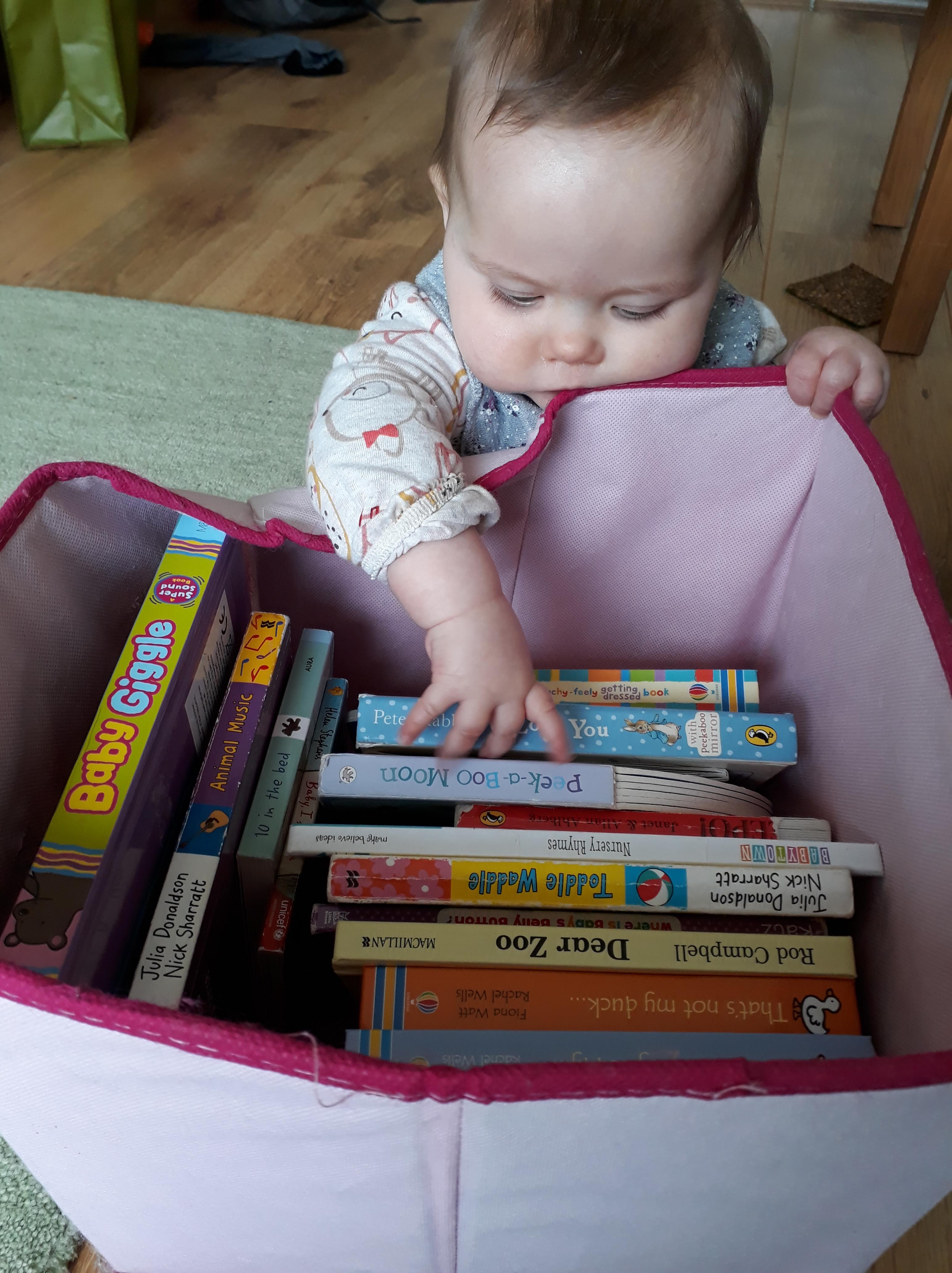
Baby reaching into a box of children's books
One of our baby bookworms

The next chapter

My kids are now 10 and 8, and perfectly capable of reading to themselves. But we still read to them every night – and plan to keep doing so for as long as they’ll let us. As well as being a cosy way to wind down together at the end of the day, it encourages them to explore slightly more challenging content they might not tackle on their own.

For my youngest, that currently means Harry Potter (those books could use some serious editing), while with her sister, we’re working our way through the Murder Most Unladylike series. These thirties-set murder mysteries are a rather fabulous sort of Agatha Christie/Malory Towers mash-up, which are delighting my daughter with unfamiliar vocabulary such as “mumbo-jumbo” and “popinjay”.

Whatever we’re reading, she’ll often pause to admire a word or ask its meaning, sometimes even jumping up to make a note of it – “I must use that in a story!” Her career ambition is to be an author, and I’d like to think that’s at least partly inspired by all the stories we’ve shared together over the years.

Now our shelves are groaning with the likes of Pamela Butchart, Jacqueline Wilson and (latest obsession) the Lottie Brooks series, I need to donate some old picture books to make room. There are plenty I’ll happily forget. But some – Goodnight Moon, The Tiger who Came to Tea, Julia Donaldson’s The Paper Dolls, to name a few – are part of the family, and they’re here to stay.


6 ways freelancing is like running

Confession time: as a freelance copywriter and editor, I’m not always brimming with creative inspiration. But getting out in the fresh air is a sure-fire way to shake things up.

I often get ideas or unravel some tricky wording while I’m jogging round the local park. And, taking part in a 10K event recently, it struck me that running and freelancing share a lot of similarities (beyond the fact that both make me want to eat a lot of cake).

1. You’re on your own

Running is a solo sport – and so is freelancing. Sure, you can go to events or team up with others for moral support, but ultimately you’re responsible for your own progress. On the plus side, going it alone means you’re free to run – or work – whenever, and wherever, you want.

2. Your race, your pace

This was the tagline for a race I entered, and it really resonated with me. I’ll never do a fifteen-minute parkrun or a hardcore ultra challenge, so there’s no point measuring myself against those superhuman types. I can only do what feels right for me. I still get to enjoy the same views, and the same runner’s high at the end!

Likewise, every business is different. Scrolling through social media, it’s easy to fall down a rabbit hole of impostor syndrome and comparison-itis. All credit to those who get up at 4am to drive growth, supercharge productivity and pull in six figures a month, but that’s not why I chose the freelance life.

3. Getting started is the hardest part

It’s not easy staring at a blank page, or setting out on a 5k run.

Some days you’re uninspired. Some days you’d rather stay in bed.

I tell myself, “You only have to run for 10 minutes”. Or, “Just write the first paragraph and then have a coffee. If it’s rubbish, you can always edit it later.” Once you’ve crossed that start line, it’s easier to keep going.

4. You get out what you put in

Sadly, the only way to get better at running is to do more running. By building up gradually, you’ll eventually start to see results.

The same applies to freelancing: you have to put yourself out there, and keep honing your skills. I fully believe that continuing to deliver quality work for nice people will pay off.

5. It’s worth the pain!

Running is hard. Despite plodding along (on and off) for years, I still get days when it feels like I’m wading through treacle. My legs ache and I’m uncomfortably out of breath.

But as soon as I finish, I feel amazing!

Freelancing isn’t always a flat and gentle jog either – sometimes it feels more like a marathon. There are definitely times I wish there was someone else to make the decisions and pay me at the end of the month (including holidays).

But then I get some lovely feedback that reminds me how much people value my skills. Or I’m able to fit work around family, and feel privileged to have so much flexibility.

6. You need a “why”

It might be easier to just get a “real” job. It would definitely be easier to never go running.

So, in true copywriter style, I focus on the benefits – the end goal. Running helps clear my mind and stretch my body after too long hunched over my laptop. And freelancing lets me do work I enjoy, while putting family first.

And that’s why, whatever bumps and niggles get in the way, I’m going to keep on putting one foot in front of the other.

5 copywriting lessons from internal comms

After nine years in internal communications, I went freelance to focus on the bit I liked best: writing. I still draw on my comms experience every day – so I thought I’d share some of the takeaways that have made me a better writer.

1. Everyone’s in a hurry

“Sorry, must have missed that.” “Oh yeah, I did mean to look at it but something came up.”

Sound familiar? It can get you down when people can’t seem to spare a few minutes to read your painstakingly crafted words. But it’s not just an internal comms problem – whoever you’re writing for, you’re competing against hundreds of other demands on their attention.

Here are some quick tips to give your message a fighting chance:

  • Come up with an attention-grabbing (but not click-baity!) headline
  • Get straight to the point – picture the “upside down pyramid”, where you start with the main message and then move down into the finer detail
  • Keep it concise – aim for short paragraphs and waffle-free sentences
  • Use subheadings to highlight key points and help readers navigate
  • Consider including a brief synopsis or key takeaways, so people get the gist (and hopefully feel inspired to read more)

2. What’s in it for me?

“I am pleased to announce that Project Snoozefest has been completed on time and on budget, following six months of work by Team Thingummy and Team Whatsit.”

If you’ve worked in internal comms, you’ll have seen more than your fair share of draft articles that open like this. Before droning on through a bunch of “key milestones” of interest to no one but the project manager.

But as a reader, all you’re thinking is: what does this mean for ME? Why should I care about it? What am I being asked to do here, and why should I bother?

This is why internal comms plans often start with what you want the audience to think (or know), feel and do. And you can apply this in the outside world, too.

If there’s a specific action required, great – spell it out, along with the benefits of completing it (book now to guarantee your space; sign up to get the latest news).

If you don’t have an immediate call to action, the big question is: so what? The key is to find an angle your audience can relate to and engage with. Clue: it’s usually about people. Improved the company’s website? That means a more enjoyable experience for customers, and fewer frustrated calls for the helpdesk folk to handle. Reduced your environmental impact? Then both colleagues and customers can feel good about choosing you.

3. Tone matters

It’s no secret that a consistent tone of voice builds brand recognition and trust. But consistency doesn’t have to mean writing like a robot.

When you work in internal comms, you can be writing a redundancy announcement in the morning and a bake sale promotion in the afternoon. It all needs to be on brand (just because you’re launching a “fun” event, there’s no call for a flurry of exclamation marks in Comic Sans). But you can be sensitive to your audience by dialling elements of your tone up or down.

Similarly, you’ll write on behalf of various different people – something I also do as a freelancer. Listening to the way people speak, and picking up on their little turns of phrase, is a good way to inject a bit more personality without colouring too far outside the lines.

4. FAQs are your friend

Some say that if you need an FAQ section (frequently asked questions), your comms haven’t done their job properly.

But see point 1 – people want the facts, fast, and sometimes trying to cover every possible nuance can detract from your overall message. It may be that once people have digested the key points, they want to dig deeper into particular aspects relevant to them.

For FAQs that add value:

  • DO put yourself in your reader’s shoes and consider genuine questions they might have
  • DO ask yourself whether these would be better addressed in the main copy
  • DON’T just shoehorn in questions to fit the answers you want to give
  • DON’T bury critical information in an FAQ – it’s likely not everyone will look at it

5. It’s a team effort

In my little freelance bubble, I’ve sometimes written copy, sent it off and never seen or heard of it again.

Back in my internal comms days, though, I’d be responsible for a piece of content from planning right through to publication. So I know how complex that journey can be: with shifting priorities and an army of stakeholders to consult, the pain of the sign-off loop is real (“Is that still version 14? We’re on version 16 now!”).

I recognise that I’m just one piece of the puzzle, so I try to make my client’s life that little bit easier by being responsive and helpful. Remembering this also helps me keep things in perspective: while I’d obviously love all my copy to be greeted with a round of applause and zero edits, I understand changes happen for all sorts of reasons, and don’t mean I’ve done a terrible job.


When I left internal comms, I couldn’t bring my work with me (confidentiality, innit). But I did bring years of writing experience that I can apply in different scenarios. If you’d like help with words for an internal or external audience, get in touch.

Busting the copyediting myths

When I say I do copywriting and editing, people tend to latch onto the “writing” part.

“Ooh, what kind of things do you write?”

(See also: “Is that a legal thing?” No – for future reference, copywriting is nothing to do with copyright.)

Copyediting, on the other hand, can be a bit of a conversation killer – there’s a lot of mystery and misconception around it. So I thought it was time to bust some copyediting myths and explain what I actually do.

Myth 1: “It’s easier to edit other people’s stuff than write your own”

I totally get this. It’s frustrating when you’ve faced down a blank page and sweated over the words to fill it, only to have someone sweep in with their track changes and rip it apart.

But the idea that “those who can’t write, edit” couldn’t be further from the truth.

Copyediting isn’t an easy option – you really need to know good writing if you’re going to comment on someone else’s. Rather than changing your words for the sake of it (“I wouldn’t have said it like that”), I make sure all my edits contribute to clearer, sharper, more engaging copy.

Myth 2: “You don’t know enough about the topic”

No question about it – you know your subject better than I do. But you want to share that knowledge effectively with your reader, right?

As your friendly wordsmith, I’m here to help you do just that. I may not be an industry expert, but I see that as a positive. I can bring that fresh perspective and ask those “silly” questions about things you might have taken for granted.

After all, if I find something confusing, the chances are other readers will too – so let’s work together to make it clearer.

Myth 3: “It’s dumbing it down”

Ah, this old chestnut.

“But our readers are experts/professionals, we shouldn’t talk down to them.”

I completely agree – your readers deserve respect. But swapping waffle and jargon for plain English doesn’t mean patronising them.

While it’s true that knowledge levels vary depending on the audience (for example, you might explain “equities” to the general public, but not to financial advisers), it’s always best not to make assumptions. Your reader might be new to the field, find reading challenging, or have limited command of English, for instance. Being clear on your terminology benefits everyone.

Plus, no matter how smart your readers, why make them work harder than they need to? We’re all busy, and we all like information that’s clear, concise and to the point.

(The gov.uk website is a good example of how accessible language can be used to convey often complex information. Did you feel “talked down to” when you applied for a passport? More likely you thought, “Phew, that was surprisingly painless!”.)

Myth 4: “People don’t really care about these details”

Which words need capital letters? Is that an en-dash or an em-dash? Do we use the 24-hour clock, or am/pm? Should it be realise or realize?

You might think these are minor details that no-one will notice or care about (other than your pesky copyeditor). And guess what? If they’re consistent, no-one will notice them. But mix them up, and it jars: not only does your writing look sloppy, but it could be confusing.

It’s worth saying here that copyediting is not the same as proofreading. Once the edits are finalised, I’d always recommend a proofread of the “clean” version to check no errors have snuck in and your presentation is pristine.

So… what is copyediting?

For me, copyediting is about two things:

  1. Making your reader’s life easier – through clear, concise and easy-to-read content
  2. Helping you shine – through engaging copy that reflects you at your best

Correct grammar and punctuation are, of course, essential. But I spend more time thinking about the less scientific concept of “flow”.

Go with the flow

Writing that flows just sounds good. It starts with a clear, logical structure and sentences that are easy to follow. Long, rambling sentences can confuse your reader, but too many short ones can be grating.

“Flow” is also about word choice. When you’re close to a text, it’s easy to miss that you’ve used “significant” in two consecutive sentences, for example: could one of those be “large”, “considerable” or “important” to avoid clunky repetition?

I’ll also make sure the words you use fit with your tone of voice. How do you want readers to see your brand? Whether it’s serious, cheeky or reassuring, consistency is everything.

The three Cs: clear, concise, consistent

Confusion and ambiguity get in the way of your message, so I’ll make sure you’re using the right words (did you mean “compliment” or “complement”?) and clarify technical terms where necessary. And let’s keep things simple: why say “utilise” when you mean “use”?

Making sentences more active generally makes them clearer: rather than “deliver an improvement in”, how about simply “improve”? It’s shorter, too. While copyediting is about more than just cutting, it often makes your writing more concise by weeding out wasted words.

Finally, I’ll polish up those fiddly bits we talked about earlier. Getting your style and formatting consistent makes for a much smoother experience for your reader.

Now you know what copyediting is (and isn’t), do you think your writing could benefit from a fresh pair of eyes? Get in touch to talk sparkly copy and happy readers.

The curse of ‘corporate’?

‘Corporate’ can be something of a dirty word in copywriting and freelance circles, synonymous with stuffy, boring and fake.

So how do I square my 14 years’ financial services experience with being a freelance copywriter?

It’s easy for impostor syndrome to creep in: after all, I’ve never created quirky packaging, masterminded a viral social campaign or seen my words on a huge billboard. Let’s be honest, pensions and HR policies just aren’t as sexy as smoothies.

But, in my first year as a freelancer, I’ve come to realise that my corporate background can actually be an asset – whoever I’m working with. Here’s why.

1. I get it

Stakeholders, steering groups, procurement processes, compliance, brand sign-off… I know how the corporate machinery works. This means that if I’m working with a corporate client, I understand what they need from me and I can ask the right questions.

I’m used to drafting key messages, and weaving purpose, vision and values into copy. I recognise that projects can start slowly, or change suddenly: priorities shift, messaging evolves or gets pulled. The pain of the sign-off loop is real, and you can get feedback from all directions – some helpful, some less so. You have to pick your battles, and (try to) not take it personally if things don’t go the way you expected.

2. I deliver

I’ve been the person ‘on the other side’, juggling multiple stakeholders (yep, them again) and trying to keep everything running smoothly on shifting sands. So, as a freelancer, I always try to make my client’s life that little bit easier by delivering my piece of the puzzle on time (or earlier, if I can).

3. I’m not scared of ‘boring’

It’s easy to make fun things sound exciting – cool trainers or delicious chocolate, for example. But what about financial products or business strategy? Aren’t they just a bit, well… dull?

Actually, I’ve never been bored writing about corporate topics – if anything, I enjoy the challenge. You might not always describe them as ‘exciting’ (and it wouldn’t feel right to position them that way). But, by taking the time to understand your offering and your customers’ needs, I can get you to ‘clear, relevant and helpful’.

Photo by George Milton on Pexels.com

4. I nail the TOV

Every company thinks they have a unique tone of voice, but in most cases it boils down to a version of ‘friendly yet professional’. Some might say that’s not very exciting, but for most corporate businesses, it works. When you’re offering a professional service to a broad range of customers, you don’t want to be too ‘out there’.

As the smart-casual of writing styles, this one is surprisingly hard to get right. People lurch from rigidly formal to cheesily over-familiar. But with years of corporate experience under my belt, I can bring consistency while remaining alert to the little nuances that make your brand sound like you.

And with my editor hat on, I’ll be all over your style guide too, getting into the nitty gritty of capital letters, date formats and all those little details that can stand in the way of perfectly polished copy.

5. I’m discreet

Data security goes with the territory in financial services. And working in internal comms, you’re party to any number of additional ‘secret squirrel’ projects that sometimes mean you can’t even talk to your own team. So, I’m always careful not to give away anything I shouldn’t. (Although I’ll admit it’s tricky to build up a shareable portfolio when most of your work is off limits!)

6. I consider all angles

Corporate comms projects often bring together people from different disciplines: PR, internal comms, marketing, customer and HR, to name a few. Hearing all those different perspectives has taught me to consider how a message might land with different audiences, and the specific questions each might have.


So, rather than glossing over my years in the rat race, I’m embracing the experience. If you’re looking for corporate copy, I’m here for you: I’ve been there, got the (branded) t-shirt and I’m ready to get stuck in. And if your business is more living room than board room, don’t write off ‘corporate’ just yet – I might just bring the fresh perspective you need.


Winning Words: parkrun

I often see interviews with successful copywriters, in which they’re asked which brands most excite or inspire them. No one’s knocking at my door with their notepad just yet, so – like choosing your imaginary Desert Island Discs for the day you inevitably achieve global superstardom – I thought I’d start my own, occasional series exploring the copy that really hits the spot.

My first Winning Words contender is parkrun. Why? Well, besides offering a fun, friendly and accessible way to keep fit, I think they deserve a gold medal for their comms. (OK, I promise no more cheesy sports references.)

They’re the embodiment of the comms mantra, think – feel – do. Let’s break it down.

Think

Photo by Pixabay on Pexels.com

If you’re thinking, “I’m not really sure what parkrun is/if it’s for me”, they make it really easy for you. A quick glance at the parkrun UK website tells you “parkruns are free, weekly, community events all around the world”. And they’re not afraid to repeat that key message till it sticks.

It’s interesting how they’ve shifted away from defining themselves as a running event. Lots of us (myself included) probably think of parkrun as a timed 5K – but that could be off-putting to those who don’t see themselves as runners. Instead, it’s now a totally inclusive “community event”, where you’re invited to “walk, jog, run or volunteer” (another oft-repeated phrase).

You’ll also see the bold, confident slogan, “Free for everyone, forever.” That’s a refreshing commitment in today’s world of limited free trials designed to hook you into complex tiered subscription models.

It’s a simple concept, clearly explained. But why should you care? Read on to find out…

Feel

Photo by Ashley Williams on Pexels.com

Making you feel something is where parkrun really excel. They do it through real-life stories on their blog and YouTube channel, which they share on social media and in email newsletters that you actually want to read.

There’s the parkrunner who’s felt supported while going through transition. The lady who was nervous about running in a hijab, and has gone on to run a marathon. The couple who met at parkrun, incorporated it into their wedding and now run with their baby in a buggy. People of all ages and backgrounds share how parkrun has helped them overcome illness, mental health issues, grief, loneliness and even a shark bite!

These diverse, personal and consistently inspiring stories are guaranteed to give you all the feels, as you read how a simple Saturday morning activity has transformed people’s lives. And that emotional connection plants a seed of “maybe I could do that, too!”

It’s all helped along by the parkrun tone of voice, which is calm, friendly and reassuring. No athletics jargon or daunting competition here – instead, you’ll see welcoming words like “no one finishes last” and “we’d love to see you soon!”.

Do

Photo by Tara Winstead on Pexels.com

Copywriters know that getting people to do something is all about the benefits. And selling that “why” is something else parkrun comms do really well. They regularly remind us (backing it up with the powerful combination of research and stories) that coming to parkrun will make you feel better – and who wouldn’t want that?

We all know exercise is good for us, but that knowledge alone isn’t always enough to make us do it. parkrun focus on how their events can make you happier, whether it’s through strengthening your body, boosting your mental health or making friends in your community.

So, now that you’re informed and inspired, it’s time to take action. The beauty of parkrun is its simplicity: “Simply complete the registration form, print your barcode and head down to your local event.” What could be easier?

Read it your way

parkrun magazine

In today’s increasingly paperless world, not many brands would think the time was right to launch a print magazine. But, never afraid to be different, parkrun have done just that. It may sound like an odd move in 2022, but when you look at the logic behind the launch, it chimes perfectly with parkrun’s brand ethos.

The paper mag represents:

  • Inclusion: parkrun is meant for everyone – yet not everyone is confident in the digital world. Yes, you have to go online to register, but some users may never engage beyond that. A print magazine available at events helps them stay up to date and connected.
  • Wellbeing: parkrun is about our overall wellbeing, and we all know staring at a screen 24/7 isn’t helpful. It’s refreshing to take a proper break with some good old-fashioned paper.
  • Community: we share links all the time, but how much of this forwarded content do you actually read? Chances are, if you don’t click through immediately you never will. But when a friend hands you a physical magazine, it feels worth investing in.

As a free, weekly, volunteer-run event that’s boosting the nation’s physical and mental health and bringing communities together, you can’t argue that parkrun is a fantastic initiative. And with 1,145 events across the UK and over 2.6 million finishers*, they’re clearly getting the message across.

*Stats from parkrun UK website, 23 September 2022

You’re worth it

It probably comes as no surprise that my stress levels have dropped dramatically since I left my corporate job. My time is my own, and the freelance work I’ve picked up has, so far, fitted comfortably around family life.

Which is why I couldn’t help feeling something of a fraud at the weekend, when I indulged in a spa day as a birthday treat. Surely this was an extravagance I hadn’t really earned?

Peering through the steam at the other guests, I imagined they were all recuperating from a hectic week of saving lives or negotiating multi-million pound deals. While I’d been, well, pottering about.

But the great thing about a spa is it allows you plenty of time for reflection. As I reclined on my gently warming lounger, my mind wandered back to the last time I’d been somewhere like this.

At that point, I was so burned out that my whole body was a ball of tension. I felt the knots slowly beginning to unravel in the soothing bubbles – only for them to return the next day when I crashed back to reality.

The thing is, when you feel like that, it’s too late. It’s going to take more than a jacuzzi to get your balance back.

You shouldn’t have to ‘earn’ time to yourself, or push yourself to breaking point before you stop and take a breath. I didn’t know anyone else’s story, and what did it matter anyway? I had just as much right to be there as they did.

Besides, I told myself, it’s not as if you’ve spent the week doing nothing. It may have been light on paid work, but there were plenty of things I had achieved:

  • made new connections, and touched base with existing ones
  • invested time and effort in applying for new opportunities
  • received an offer of upcoming work
  • explored the wealth of learning resources from the professional organisations I’ve joined (Institute of Translation and Interpreting, and ProCopywriters)
  • kept everyone fed, stayed on top of school admin, done various drop-offs and pick-ups and hosted a playdate for my youngest – a small thing, but one I always struggled to find time or energy for in my ‘old life’
  • turned a year older!

The truth is, I’m still adjusting to being my own boss. I have to keep reminding myself that a big part of making this change was about easing the pressure and improving my wellbeing – and I need to make sure I do that. There will be busier spells, but in the meantime, it’s ok to enjoy my downtime.

We all need time out to relax and recharge. It needn’t be a pricey spa day – it might be a bath bomb and a homemade face mask while the kids are at school. But whatever your definition of ‘me-time’, you do deserve it. You’ve achieved more than you think.

So tomorrow, I’m meeting friends for coffee in the middle of the morning. And I’m working really hard on not feeling guilty about it!

Time to press reset?

When I told friends I was leaving my job – without another one lined up – they were surprisingly positive.

Good for you, they said, life’s too short, you’ll be great whatever you do.

But, naturally, they were curious about my plans.

Well, I replied, first I’m going to take a little bit of time for me. Time to recharge and reset, and then we’ll see…

I don’t know where the word ‘reset’ came from. But one of my friends seized on it.

“A career reset! I love it. Maybe we all need to do that – say every 10 years, just reset and try something new!”

This got me thinking… how different might our working lives look if we weren’t afraid to press reset once in a while? Yes, I know there a million practical reasons why we don’t. But let’s put those aside for a moment, and just imagine the possibilities…

What if…?

Maybe you’ve trained as an architect, but now you’d rather design websites than buildings.

What if you’re a hairdresser, but you’d prefer to be trimming hedges than fringes?

Or perhaps you’re an accountant, but hate sitting at a desk all day – you’d rather put your number skills into teaching maths.

We’ve all daydreamed at some point about a different path: what would have happened if we’d studied that course, accepted that job offer, pursued that hobby? If you could reset and do something new, what would it be?

And it’s not just about what we do, but how, when and how much we do it. In my 20s, I just wanted to be doing something interesting and going out for Friday night drinks. In my 30s, I was focused on a good salary and job security, as I climbed onto the property ladder and started a family. In my 40s, it’s more about being there for my kids and looking after my own wellbeing.

Walk the line

We’re so used to seeing careers as a linear thing – ideally, a line that points relentlessly upwards. But what if your line is more of a zigzag, or a figure of eight, or a series of dots?

While the ‘job for life’ may be a thing of the past, there is still an expectation that we choose a career and stick with it. We’re told that having a series of seemingly unrelated jobs will make us look fickle, unreliable, lacking in direction. (Not to mention that it’s actually pretty hard to achieve: employers typically look for experience in a similar role, while retraining and starting again at the bottom may not be financially viable.)

But is that changing? The media is awash with stories of the “Great Resignation”, often attributed to people re-evaluating their work during the pandemic. Are more of us taking time to reset? Or will we prioritise stability (and cosy offices) in the face of soaring bills?

My own reset has been fairly minor – “evolution not revolution”, as the corporate cliché goes. Rather than doing something completely new, I’m using my existing skills (writing, editing and translating) in a different way.

What about you? Do you like the idea of a career reset every once in a while? Or have you already restored factory settings for a complete reboot?

Easy as A, B, C?

Do you remember learning to read?

I don’t – not really. I have a distant recollection of Hairy Hat Man and Kicking King. Of tracing over endless letters and words, wondering what on earth a ‘nib’ was and why it featured so heavily in our work book when I’d never set eyes on one.

I’m pretty sure I could read when I started primary school, though, as I recall being distinctly unimpressed with Ben and his dog Lad (were they the 80s Biff and Chip?) with their endless running and looking.

But I can’t remember the exact moment when that c, a and t leapt off the page in the shape of a furry feline.

Now my five year old is at just that crucial stage, and I’m loving coming along on her journey as the squiggles and symbols suddenly take on a thrilling meaning.

She’s known the letters and sounds for some time, and could recognise a few short words and familiar names. But recently, it’s like something has clicked and the world is opening up around her every day. Suddenly, words are everywhere.

When I’m reading bedtime stories, she triumphantly points out words she’s spotted all over the page (much to her sister’s frustration).

She sits, intently, with a book held up to her face, as if willing it to make sense – like those Magic Eye posters in the 90 where, if you stared till you went cross-eyed, a fuzzy 3D palm tree or hot-air balloon would suddenly rise from the page.

When we go out, she keeps up a running commentary: “Bus!” “Shop!” “Way in!” “Mummy, what does ‘i-c-e c-r-e-a-m’ spell?”

It strikes me just how life-changing it is learning to read. The world suddenly reveals its secrets. All the exciting places are signposted for you. The park! The beach! A toy shop! You can see for yourself what’s on the menu, or inside the packet. And you know when mum and dad are whispering about c-a-k-e.

Of course, reading opens up the digital world too – and that can be not so much a can of worms as a writhing pit of poisonous snakes. My seven year old can confidently navigate to the songs and TV programmes she wants. She’s also pretty handy with a Google search. But what answers will she find there? As parents, we have an enormous responsibility to keep our children safe online – teaching them not just how to ask the questions, but also whether they can trust the answers. That’s a challenge I need to be ready for.

For now, though, I’m enjoying my daughter’s journey of discovery, while marvelling at how anyone ever makes sense of the English language – with its sees and seas; its coughs, roughs and boughs; its silent letters, borrowed words and contradictory rules. I’m looking forward to watching her get lost in a book of her own, transported to another world by those once mysterious squiggles.

But I’m going to keep reading those bedtime stories for as long as she’ll let me!

Moving on up

Well, today was an emotional one. Watching my youngest daughter’s “moving on” ceremony at nursery before she starts primary school in August.

While (disappointingly) there were no miniature caps and gowns, there were plenty of photo opportunities as our little darlings walked over the “moving on bridge” to claim their rolled-up certificates (some of which were instantly deployed as guns or telescopes). And when their little voices broke into a song about “spreading our wings and flying away”, there was definitely some dust in the air that was getting in the parents’ eyes…

Occasions like this always spark mixed emotions. I’m filled with pride at the bright, happy, confident little person she’s become. I know she’s more than ready for school, and it’s a gentle transition as she’s only moving into the adjacent building together with most of her friends. But at the same time, the snuggly baby days are well and truly over, and I couldn’t tell you what happened to the last five years.

I’m also just so grateful we got to be there. Nursery graduation was one of the many casualties of Covid for my eldest – a missed milestone along with sports days, nativities, birthday parties and primary school visits. That said, in pre-pandemic times many mums and dads would have had to request a half-day’s leave to attend an event like this, with all the rushing and juggling that entails. We have lockdown to thank for accelerating the flexible and home working practices that enable parents to fit these priceless moments into our working day.

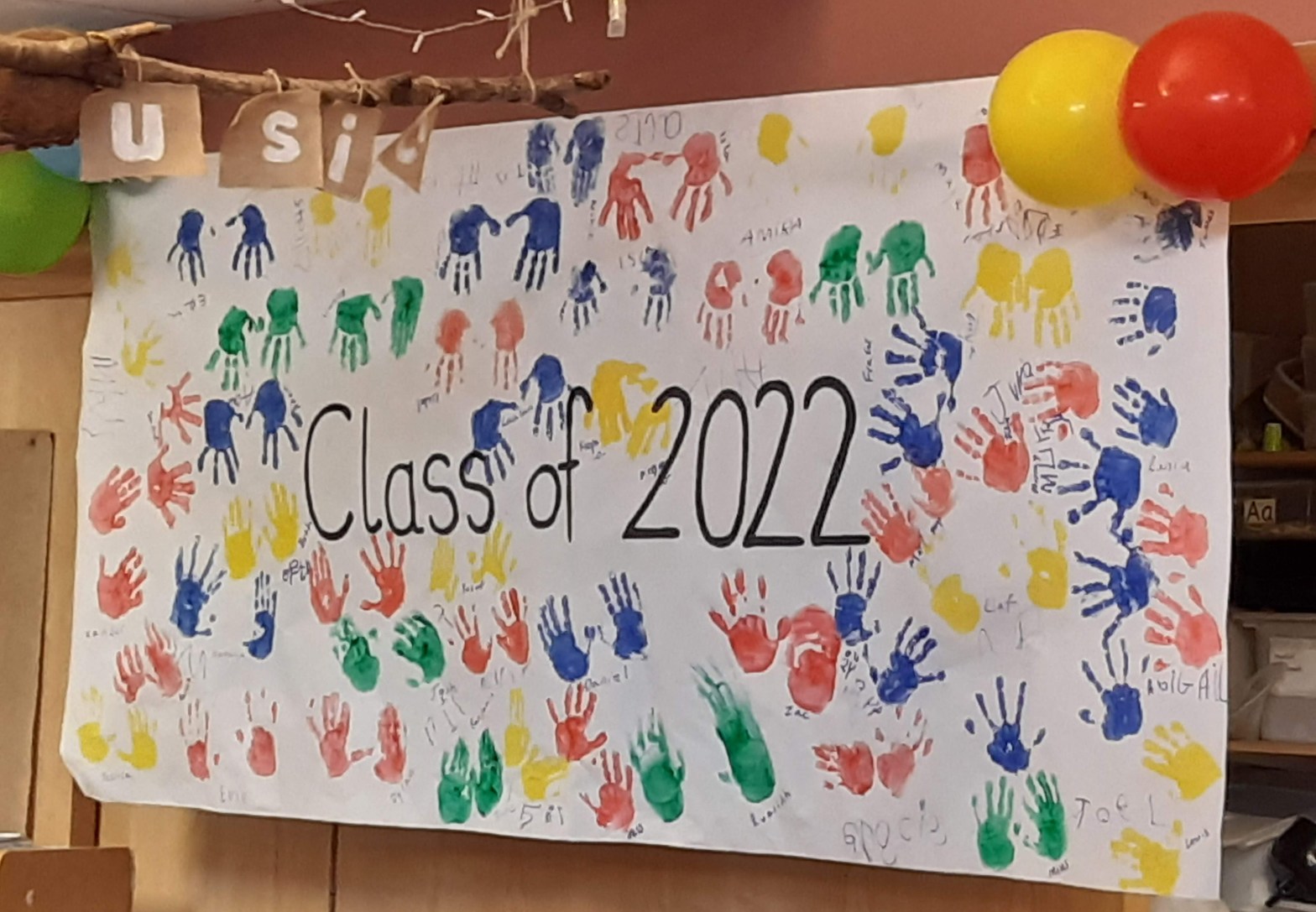
Five is a fascinating age: you can see real personalities emerge, as children’s understanding of the world evolves and they express themselves so much more clearly (and often, let’s face it, brutally honestly). Watching our “class of 2022” take their next step, you can’t help wondering what they’ll become as they make their way in our strange and increasingly scary world. My daughter’s career ambitions are, variously, ballerina, hairdresser and “scientist who finds out all about colours”. Personally, I think a writing gig might beckon – a natural storyteller, she has a vivid imagination and a way with words. (She recently announced, “I don’t want to learn to read, I just want to be able to write.” Even as I explained why this wasn’t really a viable learning approach, I had to admire her drive to get her ideas down on paper and let nothing stand in her way.)

But for now, we’re taking it day by day as a new phase begins for all of us. New teachers, new friends, new uniforms and, for me, a new direction as I start working for myself. Time to spread those wings and see where we land!